Jay Culbert Host

Jay Culbert

Appears in 135 Episodes

#134

Nobody’s Dying. Stay Calm and Make the Call with Rick Kaiser

What does leadership look like when the stakes are at their highest? And what happens when those same lessons are applied to the everyday challenges of leading a team? In this episode of Facility Rockstars, host Jay Culbert sits down with retired Navy SEAL Master Chief Rick Kaiser, Executive Director of the National Navy SEAL Museum, Silver Star recipient, author of Frogman Stories, and veteran of 34 years of military service. Rick shares lessons from his time with SEAL Team Two and SEAL Team Six, including his experience during the Battle of Mogadishu, and explains why some of the most important lessons in leadership come down to staying calm, holding people accountable, and being willing to do the same jobs you ask of your team. Rick also takes Jay inside the leadership challenges of running the Navy SEAL Museum, where facilities, volunteers, operations, and unexpected problems all come with the territory. From cleaning toilets in Bosnia to handling logistics at SEAL Team Six, Rick's stories reinforce a simple idea: titles don't excuse leaders from getting their hands dirty. Great leaders step up, set the example, listen to their people, and make the call when it matters.   Takeaways: Being a good follower and listener helps you become a better leader. Leadership isn’t always about taking charge. Rick emphasizes recognizing when it’s time to lead, when it’s time to follow, and when it’s time to get out of the way. Leaders have to be willing to do the jobs they ask of others. Whether taking the least desirable seat during a mission or cleaning toilets for his team in Bosnia, Rick believes leaders have to set the example through their own actions. Accountability keeps teams operating effectively. Rules and expectations only work when they’re reinforced. Rick explains why someone has to “hold the line” and why a lack of consequences can quickly lead to chaos. Mental toughness can outweigh raw physical ability. Rick says succeeding in BUD/S requires physical capability, but the defining characteristic is the mental toughness to continue when quitting becomes the easier option. When a challenge feels overwhelming, focus on getting through the next hour. Rick describes approaching some of the hardest moments of SEAL training hour by hour rather than allowing the entire challenge to become overwhelming. Staying calm allows leaders to make better decisions under pressure. Instead of getting swept up in workplace chaos, Rick believes leaders should put the situation into perspective, gather input from the people around them, and make a decision. Great facilities teams make everything else possible. Now running the Navy SEAL Museum, Rick sees firsthand how much an organization depends on its facility professionals. When the building and its systems work, everyone else can focus on accomplishing the mission. Quote of the Show:  “A bad call is better than no call at all.” Links: Email: RKaiser@navysealmuseum.com  Website: https://www.navysealmuseum.org/  Book: “Frogman Stories: Life and Leadership Lessons from the SEAL Teams”https://a.co/d/08asAYst  Shoutouts:  Elaine Ryan: https://www.linkedin.com/in/laineryan/  Swim with a Misson (SWAM): https://www.swam.org/  Navy Seal Museum San Diego: https://navysealmuseumsd.org/   Admiral McRaven Jack Carr Sal DeFranco Matt Anthony
#133

You’ll Never Stop Firefighting Without the Right Systems with Dean Vieira

Facilities teams can spend their entire day putting out fires, but without the right systems in place, that cycle never ends. In this episode of Facility Rockstars, host Jay Culbert sits down with Dean Vieira, Facilities Maintenance Manager at CA Design, to talk about his transition from technician to facilities leader and what he has learned about building more proactive, reliable maintenance operations. Dean shares how one team went from roughly 80% reactive maintenance to 80% proactive and preventive maintenance, why tracking the work was a critical first step, and how consistency helped make the change stick. Dean also explains why technical expertise alone isn't enough when you move into leadership. He discusses learning to view problems through a business lens, earning management's trust by delivering on promises, getting teams to embrace new systems, and protecting yourself from burnout in a career that rarely fits neatly into traditional working hours.   Takeaways: Stop accepting firefighting as the norm. Without systems and processes in place, reactive maintenance will continue consuming the team's time. Track before you try to improve. Dean's team used maintenance software to understand what they were actually doing and identify recurring failures that could become preventive tasks. Facilities leaders have to think beyond the repair. Moving from technician to manager required Dean to consider production value, priorities, downtime, and the overall needs of the business. You don't need to use every feature of your CMMS. Dean's team eventually identified the functions that mattered most and focused on consistently using those instead of trying to do everything. Consistency creates lasting change. Dean describes persistence, rather than demanding immediate compliance, as one of his most effective approaches to changing behavior. Trust gives your ideas more runway. When leadership knows you deliver on what you promise, they're more likely to listen when you bring them difficult news or ask for additional resources. Protect yourself from burnout. Facilities work often means weekends, off-hours calls, and interrupted vacations, making the ability to switch off especially important. Quote of the Show:  “If you don't put systems in place, you will never stop firefighting.” Links: LinkedIn: https://www.linkedin.com/in/dean-vieira-cfm-60891abb/  Website: https://c-a-design.com/ 
#132

When 70,000 People Show Up, Everything Has to Work with Andrew MacFadyen

Facilities work often goes unnoticed when everything is running smoothly. In this episode of Facility Rockstars, host Jay Culbert sits down with Andrew MacFadyen, Regional Vice President of Engineering at UG2, to discuss the lessons he’s learned over more than two decades in facilities, including his experience at some of New England’s most recognizable sports and entertainment venues. Andrew shares stories from major projects at Gillette Stadium and TD Garden, along with his approach to leadership built on honesty, empathy, and communication. He also discusses how AI is helping him work more efficiently, why human judgment still matters, and the importance of hands-on experience and strong relationships in facilities.   Takeaways: Facilities success often happens behind the scenes. Andrew compares facilities professionals to offensive linemen and a duck swimming across the water: everything may look effortless from the outside, while an incredible amount of work is happening underneath. Trust starts with how you treat people. Andrew’s biggest leadership lesson is simple: treat others the way you want to be treated. Honesty, empathy, and transparency can create a strong foundation for relationships with employees and customers. Emotional intelligence changes how you communicate. Transparency does not mean communicating with everyone in exactly the same way. Strong leaders learn to read the room and understand what to say, when to say it, and who needs to hear it. Preparation needs contingency plans. During a major TD Garden renovation, Andrew’s team balanced construction with an active event schedule. Success required constant communication between stakeholders and backup plans for when materials, schedules, or other variables changed. Facilities can shape the customer experience. Facility teams cannot control what happens on the field, court, or ice, but they can control the environment around it. Cleanliness, comfort, security, food service, and reliable building operations all contribute to the experience. AI works best as a tool, not a replacement for judgment. Andrew has found value in using AI for difficult communications, SOP development, reporting, data analysis, and troubleshooting, while still emphasizing the importance of human oversight. The trades need the next generation. With an aging workforce, Andrew sees significant opportunity for young professionals willing to learn technical skills, ask questions, and gain hands-on experience. Build your network before you need it. Looking back, Andrew wishes he had invested more time earlier in his career attending conferences, continuing his education, and developing industry relationships. In facilities, the person who can help solve your next challenge may only be a phone call away. Quote of the Show:  “Stay true to who you are and continue to treat others the way you want to be treated.” Links: LinkedIn: https://www.linkedin.com/in/andrew-macfadyen-391b494/  Email: andrew_macfayden@yahoo.com  Website: https://ug2.com/ 
#131

When Things Go Wrong: How Facility Leaders Rise to the Challenge

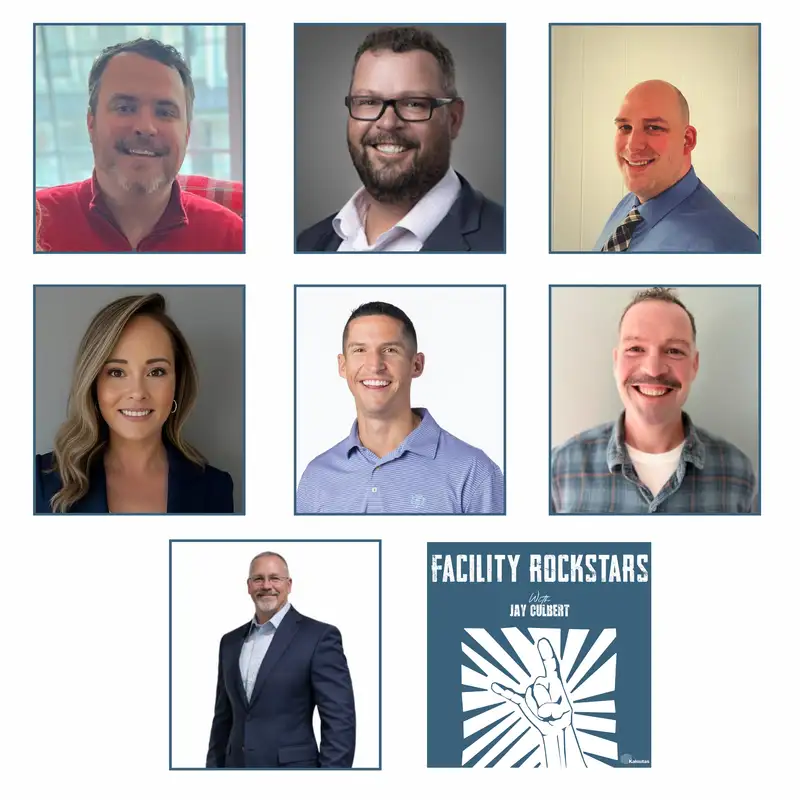
Every facilities professional has a story about the moment when things didn't go according to plan. In this special compilation episode of Facility Rockstars, we're revisiting conversations with Robert “Bob” Mack, Director of Facilities and Laboratory Operations at Korro Bio; Andrew DelPrete, Senior Facility Manager at Liberty Mutual Insurance and former President of IFMA Boston; Mark Netherton, Maintenance Manager at Grower Direct Farms; Carrie Battafarano, formerly Maintenance Manager at Nouria and now Business Development Manager at A-PRIME; Jeff Chierepko, Vice President of Global Facilities Management, Construction, CRE & EHS at SIG Sauer; Derek Earp, formerly Facilities Manager at UG2; and Jeff Beaudry, Regional Facilities Director at Appleton Corporation. Together, they share some of the toughest challenges they've faced throughout their careers and what it took to work through them. From a devastating facility fire and high-stakes safety incidents to troubled construction projects, vendor communication breakdowns, transitioning into management, and developing the next generation of leaders, these stories show just how much can land on the shoulders of a facilities professional. More importantly, they reveal what happens next. You'll hear how preparation can make the difference when an emergency strikes, why communication and trusted relationships matter when solving problems, and why sometimes the biggest leadership challenge is resisting the urge to do everything yourself. Takeaways: Preparation shows its value when something goes wrong. Training, procedures, and strong safety programs give teams something to fall back on when they're faced with an unexpected incident. A strong team can make an enormous difference during a crisis. One facilities team went from losing power, water, technology, and major portions of its operation in a fire to restoring essential systems within days. Direct communication can prevent small problems from becoming recurring ones. When information has to pass through multiple vendors, the original expectations can easily get lost. Get the right people in the room. Construction, design, facilities, and project teams working in separate "pods" can create unnecessary meetings and slow down decision-making. Not every meeting needs to be an hour. Focused conversations with the people who can actually make decisions can keep projects moving. Doing it yourself isn't always good leadership. Taking the time to teach, delegate, and let others take ownership is essential for developing a team that can operate without relying on one person. Developing leaders requires continued support. Promoting talented people is only the beginning. Leaders need to stay engaged, check in, and help the people around them grow. Challenges become experience you can use later. The lessons learned from past mistakes and difficult situations can make teams better prepared for whatever comes next. Quote of the Show:  “It’s the best way to learn is making mistakes, and I’ve made, like, all of them.” — Jeff Chierepko Links: Mark Netherton LinkedIn: https://www.linkedin.com/in/marknetherton2/   Email: manetherton@gmail.com   Derek EarpLinkedIn: https://www.linkedin.com/in/derekearp/   Carrie Battafarano LinkedIn: https://www.linkedin.com/in/carrie-battafarano-82ab3a59/   Email: cbattafarano@nouria.com  Jeff ChierepkoLinkedIn: https://www.linkedin.com/in/jeff-chierepko-2126964b/   Bob MackLinkedIn: https://www.linkedin.com/in/bobmack9/  Andrew DelPreteLinkedIn: https://www.linkedin.com/in/andrew-delprete-a2b5807a/  Jeff BeaudryLinkedIn: https://www.linkedin.com/in/jeffrey-beaudry-a132b311a/  Email: jbeaudry@oconnells.com  
#130

You Have to Be the Example with Jonathan Gendron

Facilities management is demanding. Between 24/7 operations, unexpected failures, tight deadlines, and the responsibility of leading a team, it can be easy to put your own well-being on the back burner. In this episode of Facility Rockstars, Jay Culbert sits down with Jonathan Gendron, Field Engineering Manager at TJX Companies, to talk about the human side of facilities leadership. Jonathan shares why prioritizing mental health has become one of the biggest lessons of his career, how empathy and vulnerability have shaped his leadership style, and why great leaders need to be willing to show up alongside their teams when things get difficult. Jonathan also reflects on a catastrophic facility failure that cost millions of dollars in lost product, the importance of balancing proactive and reactive maintenance, and his journey from vocational school to a 15-year career spanning biotech, life sciences, power generation, and commercial retail. For Jonathan, strong facilities leadership ultimately comes down to a few fundamentals: keep learning, own your mistakes, care about your people, and bring the right attitude every day.   Takeaways: Prioritize your mental health. Facilities professionals are often expected to be everywhere and solve everything. Jonathan believes leaders need to take care of themselves if they expect to effectively take care of their teams. Never stop learning. Jonathan learns from mentors, leaders, direct reports, certifications, classes, and his own mistakes. Continuous learning keeps both his career and his work from becoming stale. Turn mistakes into teachable moments. Leaders aren't flawless. Jonathan believes admitting mistakes and sharing what you learned gives your team permission to do the same and can prevent them from repeating those mistakes. Empathy is a leadership skill. Understanding that employees have families, health concerns, and challenges outside of work can build trust and morale that people remember. Be the example you want your team to follow. When Jonathan's team responded to an emergency at 3:00 AM, he drove two hours to Boston to be there alongside them. Prepare to be proactive AND reactive. Preventive maintenance matters, but unexpected equipment failures will still happen. Strong facilities teams need a plan for preventing problems and responding when prevention isn't enough. Attitude can outweigh credentials. Jonathan's advice for someone entering facilities is simple: attitude is everything. Experience and credentials matter, but having the right attitude can take you a long way. Quote of the Show: “When you genuinely show that you care for your team, they will care for you. And they’ll care for their job as well.” Links: LinkedIn: https://www.linkedin.com/in/jonathan-m-gendron/  Website: https://jobs.tjx.com/global/en 
#129

Stop Blaming People: Build Better Systems with Ron Gantt

What if the biggest problem with workplace safety is the way we think about failure? In this episode of Facility Rockstars, Jay Culbert sits down with Ron Gantt, Vice President of Environmental Health and Safety at Beale Infrastructure, to challenge some of the traditional thinking around human error, incident investigations, and workplace safety. Ron explains why mistakes often aren't simply failures of the individual, but signs of a mismatch between people and the environments they're working in. Instead of asking who made the mistake, he encourages leaders to look at the demands people face, the resources available to them, and what can be changed to help them succeed. Jay and Ron also explore psychological safety, creating stronger relationships with contractors, moving away from punitive safety cultures, and why meaningful change doesn't always require a massive organizational initiative. Sometimes, the best place to start is with the part of the system you can actually control.   Takeaways: Get the right people in the room when solving problems. The people closest to the work often have context that leadership doesn't. Ron stresses involving the people who will actually be affected by a decision instead of designing processes for them without their input. Human error is often a symptom, not the root problem. Rather than assuming a mistake lives within an individual, Ron encourages leaders to examine the mismatch between a person and their environment. Look at what made the task difficult, what pressures were present, and whether the person had the resources needed to succeed. Build systems that account for the fact that people will never be perfect. Mistakes are inevitable, especially in complex and changing environments. Strong safety systems don't just try to prevent errors. They include safeguards that help people recover when something does go wrong. Incident investigations should help you decide what to do next. Understanding what happened matters, but Ron argues that the real value of an investigation is using what you learn to improve how the system operates today and tomorrow, rather than simply assigning blame for the past. Safety is more than the absence of accidents. Ron defines safety as the capacity to succeed even when conditions change. That means understanding the demands workers face and ensuring they have the resources, tools, training, and support needed to adapt. Ask, “What did we actually fix?” Punishment, retraining, or corrective action can make it look like an organization responded to an incident without addressing the conditions that contributed to it. The better question is whether the response actually made future work safer. Start small and focus on what you can control. Meaningful change doesn't always require a massive initiative or complete buy-in from senior leadership. Ron encourages safety professionals to change what they can within their own sphere of influence, demonstrate that it works, and allow those small wins to create momentum. Quote of the Show:  “Human error is a problem that lives in a mismatch between the person and their environment.” Links: LinkedIn: https://www.linkedin.com/in/ron-gantt/  Email: rongantt@hotmail.com  Website: https://bealeinfra.com/ 
#128

Show Up for the Jobs That Suck with Sean Dearnley

The best facility leaders don’t just tell their teams what needs to get done. They show up and do the hard work alongside them. In this episode of Facility Rockstars, Jay Culbert sits down with Sean Dearnley, GxP Facilities Manager at CRISPR Therapeutics, to talk about the lessons Sean has learned working his way from hands-on HVAC and maintenance roles into facilities leadership. Sean shares why small acts of discipline can have a major impact, how thoughtful planning can turn an intimidating facility shutdown into a smooth operation, and why creating a strong maintenance culture requires constant reinforcement. He also explains how his years as a technician continue to shape the way he plans, communicates, and leads today. From predictive maintenance and GMP documentation to communication and team building, Sean offers a practical look at what it takes to keep critical environments running while building a team that trusts one another.   Takeaways: Do the work upfront. Strong planning, preventative maintenance, and redundancy can make difficult situations much easier to execute when the time comes. Leadership doesn’t require a title. You can lead from any position by recognizing opportunities, communicating clearly, and helping the people around you succeed. Show up when the work gets difficult. Leaders build trust through action, especially when they are willing to work alongside their teams during the jobs no one wants to do. Listen to the people closest to the equipment. Operators and technicians often have valuable information that can make troubleshooting faster and more effective. Communication and documentation matter. In GMP environments especially, completing the repair is only part of the job. The ability to clearly communicate and document what happened separates good technicians from great ones. Quote of the Show:  “I don't think there's any better team-building exercise than being in a crappy situation and figuring it out with your team and getting through it.” Links: LinkedIn: https://www.linkedin.com/in/sean-dearnley-171a1399/  Website: https://crisprtx.com/ 
#127

The Lessons That Stuck: A Facility Rockstars Summer Recap

This summer brought some incredible conversations to Facility Rockstars, but across different industries, roles, and experiences, the same lessons kept showing up. In this special solo episode, Jay Culbert looks back at the conversations and experiences that defined the summer, from Facility Rockstars events and the special EHS series to discussions about curiosity, adaptability, leadership, safety, and building stronger relationships. Jay reflects on lessons from Tim Reynolds, Maria Ruiz, Nick Petrosino, Rich Martelli, Pete Susca, Lindsay Seiberling, Jason Hyde, Darin Goodwin, and several past EHS guests, while sharing the ideas that have stuck with him most. The biggest takeaway? Great facility leaders don't just understand their buildings. They understand their people. Jay also gives a preview of what's ahead this fall, including upcoming events, new collaborations, future guests, and more opportunities for the Facility Rockstars community to connect.   Takeaways: Stay curious enough to ask questions and humble enough to admit when you don't know something.  Leadership isn't about always having the answer. Sometimes it's about knowing which question to ask. You can't control every challenge, but you can control how you communicate, respond, and bring people together. Safety only works when you get the human side right. Build relationships before you need them. Trust is much harder to create in the middle of a crisis. Behind every process, piece of equipment, safety program, and facility are people. Links: LinkedIn: https://www.linkedin.com/in/jay-culbert-2675998/  Facility Rockstars Website: https://www.facilityrockstars.com/  Shoutouts:  Tim Reynolds Maria Ruiz Nick Petrosino  Rich Martelli  Pete Susca Lindsay Seiberling Jason Hyde Darin Goodwin Colleen Walker Vanessa Brady Lori Santoli Jessica Goodhue Don Bezek Don Watson
#126

Why Great Vendor Relationships Are a Competitive Advantage with Troy Hollenbeck

Behind every well-run facility is a network of trusted relationships, thoughtful planning, and leaders who know that success isn't built alone. This week, Jay sits down with Troy Hollenbeck, an experienced facilities and operations leader, to discuss what he's learned after more than 25 years in the industry. From managing reactive maintenance environments and navigating post-COVID supply chain challenges to building strong vendor partnerships and creating exceptional customer experiences, Troy shares practical lessons that apply to every facilities professional. Throughout the conversation, he explains why patience, empathy, and continuous learning are some of the most valuable tools a leader can have.   Takeaways: Strong relationships produce stronger results. Troy believes the best way to improve vendor performance is simple: make people want to work with you. Building trust, showing respect, and understanding the challenges vendors face creates partnerships that consistently deliver higher-quality work. Patience is one of the most valuable leadership skills. Facilities work is naturally reactive, but slowing down long enough to fully assess a problem often prevents bigger mistakes. Taking a measured approach leads to better decisions and more effective solutions. Preventative maintenance creates operational stability. While emergencies can't always be avoided, investing in preventative maintenance helps reduce downtime and gives teams a better chance of resolving issues quickly when they do occur. Standardization makes maintenance more efficient. Maintaining consistent equipment across facilities simplifies repairs, improves parts availability, reduces inventory complexity, and allows teams to respond faster when equipment fails. Customer experience extends far beyond the building itself. Whether it's curb appeal, store presentation, or amenities for EV charging customers, every detail shapes how people perceive a facility and whether they'll choose to return. Never assume you know everything. Troy encourages leaders at every stage of their career to stay curious, continue learning, and recognize that every team member brings valuable experience and perspectives to the table. Quote of the Show:  "The simple thing is don't expect that you know more than everybody else." Links: LinkedIn: https://www.linkedin.com/in/troy-hollenbeck-65717221/  Instagram: https://www.instagram.com/troy_hollenbeck72/  Company Website: https://www.cumberlandfarms.com/ 
#125

People Are the Safety Strategy with Six EHS Leaders

To close out our six-week series dedicated to environmental health and safety leadership, this special compilation episode brings together highlights from Jay Culbert's conversations with six standout EHS professionals: Colleen Walker, Vanessa Brady, Lori Santoli, Jessica Goodhue, Don Bezek, and Don Watson. Rather than a single interview, this episode weaves together their most memorable stories, from redesigning lockout/tagout procedures to make them intuitive on the plant floor, to navigating management-of-change processes for new equipment and chemicals, to rethinking how facilities are designed with universal accessibility in mind. Across every story, one thread holds the whole series together: EHS is fundamentally a people profession. Guests reflect on building cross-functional trust, using automation to eliminate hazards without eliminating jobs, balancing safety requirements against food-safety regulations, and the lasting lessons learned from leading teams through COVID-19. Whether you've followed the whole series or are just tuning in, this finale distills six weeks of hard-won wisdom into one conversation about why the technical side of safety only works when the human side comes first.   Takeaways: Make safety procedures visual, not just verbal. Complex lockout/tagout steps became far more reliable once translated into color-coded, numbered visual indicators that workers could follow in the moment — not just recall from training. Build a cross-functional review process for management of change. Before bringing in new equipment, chemicals, or technology, loop in a team to review risks, permits, and training needs upfront — it's cheaper than discovering the gap after the fact. Automate to eliminate hazards, not to eliminate people. Look for opportunities to remove human error from dangerous manual tasks while redirecting — not replacing — the people who did them. Understand your industry's unique constraints. Safety solutions that work in one sector (like food manufacturing, with its strict food-safety rules) may need to be adapted rather than copy-pasted from another. Design facilities around all users, not just the average one. Applying universal design principles — equitable use, simplicity, low physical effort — early prevents costly retrofits and creates genuinely inclusive workplaces. Lead with relationships before you need them. Getting to know coworkers across departments — their interests, their pressures — makes it far easier to gain buy-in when it's time to introduce a safety change. Communicate constantly, even when you don't have all the answers. Consistent, two-way communication between the floor and leadership builds the trust that safety initiatives depend on to actually stick. Quote of the Show:  "At the end of the day, it's a person, then it's people, and then you're back to people." Links: Colleen WalkerLinkedIn: https://www.linkedin.com/in/colleenm-walker/   Website: https://www.stanleyblackanddecker.com/   Email: colleen.able@sbdinc.com   Vanessa BradyLinkedIn: https://www.linkedin.com/in/vanessa-a-brady-ms-cih-csp-0096316/   Charles River Laboratories Website: https://www.criver.com/   American Industrial Hygiene Association: https://www.aiha.org  Lori SantoliLinkedIn: https://www.linkedin.com/in/lori-santoli-csp/  Jessica GoodhueLinkedIn: https://www.linkedin.com/in/jessica-goodhue-b50744271/   Website: https://channelfish.com/   Email: jgoodhue@channelfish.com  Don BezekLinkedIn: https://www.linkedin.com/in/donbezek/   Website: https://griffithfoods.com/    Don WatsonLinkedIn: https://www.linkedin.com/in/donwatson94/   Website: https://www.oracle.com/ 
#124

Safety Is the Foundation, People Are the Job: James Chapdelaine on Building Trust from the Floor Up

In the 5th installment of our special EHS series, host Jay Culbert sits down with James Chapdelaine, Senior Manager of Environmental Health and Safety at CIRCOR International, shares how nearly two decades in EHS taught him that his real job isn't safety; it's people.  He explains why the strongest safety programs are never built behind a desk, but developed alongside the employees who use them every day, and how listening, communicating, and following through are what actually earn buy-in on the floor. James also walks through how a failed pre-shift inspection program at his former company, Stanley Black & Decker, evolved from a generic paper checklist to a fully digital process,  a case study in his personal motto, "small improvements, lasting change." He closes with a candid conversation about staying "steady in the storm" as a leader, breaking down silos between EHS, facilities, and HR, and what drives him outside of work.    Takeaways: Lead with trust, not authority. Safety programs succeed when people believe in why they exist — not just because they're written well. Invite every concern, safety-related or not. Being willing to help with small, non-safety issues is often what opens the door to bigger trust. Close the loop, every time. Even when a fix takes time, communicating progress keeps people from feeling ignored — and keeps them coming back with feedback. Expect to fail, then adapt. James's pre-shift inspection program went through three iterations — generic paper, detailed paper, then digital — before it worked. Make incremental progress your operating philosophy. "Small improvements, lasting change" keeps overwhelming projects from becoming paralyzing. Stay steady under pressure. A calm, consistent leader gives a team permission to stay focused instead of panicking. Break down departmental silos. EHS, facilities, maintenance, and HR need to move together — rolling out a program without the right partners in the room is a setup for failure. Quote of the Show:  "You can have the best written safety program or procedure in the world... but if people don't understand it, they don't believe in it, then it's just set up to fail right out the gate." Links: LinkedIn: https://www.linkedin.com/in/jamesezrachapdelainecshm/  Website: https://www.circor.com/ 
#123

The Hidden Cost of Shortcuts with Darin Goodwin

Creating a strong safety culture isn't about policing people. It's about earning trust, communicating clearly, and helping employees understand why safety matters. In this episode of Facility Rockstars, Jay Culbert sits down with Darin Goodwin, HSE Senior Manager supporting Takeda Pharma Global at CBRE Global Workplace Solutions. Drawing on more than 30 years of environmental health and safety leadership, Darin shares practical lessons on building a culture where people feel empowered to speak up, stop unsafe work, and take ownership of protecting themselves and those around them. From improving training engagement and documentation to changing workplace behaviors through empathy instead of authority, Darin explains why safety professionals are at their best when they work with people instead of against them. The conversation also explores leadership, communication, technology, distracted workplaces, and why every safety decision has an impact that extends far beyond the individual involved.   Takeaways: Communication removes uncertainty: Clear expectations and open dialogue eliminate the "gray areas" where misunderstandings and safety issues often develop. Great safety leaders communicate just as effectively with executives as they do with frontline employees. People need to understand the "why”: Rules alone rarely change behavior. When employees understand why a procedure exists and the real consequences of ignoring it, they're much more likely to make safer decisions. Safety culture is built through relationships: Employees respond far better to leaders who coach and support than those who simply enforce rules. Working alongside people creates trust, accountability, and long-term buy-in. Strong processes create safer outcomes: Checklists, documentation, supervisor approvals, and consistent procedures help remove uncertainty and ensure important safety steps aren't skipped when work gets busy. Every incident impacts more than one person: A workplace injury affects coworkers, families, productivity, and the organization as a whole. Safety isn't just about preventing accidents. It's about protecting people's lives both inside and outside of work. Never hesitate to stop unsafe work: Stop-work authority exists for a reason. Speaking up before something goes wrong is one of the most important responsibilities anyone can have in creating a safer workplace. Quote of the Show: "Always be open in communication with people so they know what you're expecting. You get more with sugar than you do with spice." Links: LinkedIn: https://www.linkedin.com/in/daringoodwin/  Website: https://www.cbre.com/services/manage-properties-and-portfolios/facilities-management 
#122

Why Safety Culture Starts with Human Connection with Jason Hyde

Part three of our special six-week series spotlighting Environmental Health & Safety (EHS) professionals features Jason Hyde, EHS Manager at SIGCO, Inc., whose approach to safety leadership goes far beyond compliance. Jason shares why building a strong safety culture starts with understanding people, not just policies. From creating personal connections that change behavior to navigating language barriers, mental health, and emergency preparedness in today's evolving workplace, he explains why the best safety leaders focus on trust, communication, and employee engagement. This conversation offers practical insights for anyone responsible for protecting people while building a culture where employees genuinely want to do the right thing.   Takeaways: Safety culture is built through people, not policies. Compliance is essential, but regulations alone don't change behavior. Creating personal connections and helping employees understand why safety matters is what drives lasting cultural change. Make safety personal. Every employee has a different motivation for working safely. Leaders who take the time to understand what matters most to their people can create conversations that lead to meaningful behavior change. Your workforce is one of your greatest resources. Instead of trying to solve every communication challenge alone, empower employees to become part of the solution. Leveraging bilingual subject matter experts and involving frontline workers strengthens both understanding and trust. Never compromise what's right. Safety professionals will inevitably face pressure to take shortcuts. Jason explains why standing firm, presenting facts, and leading with integrity is essential for protecting both employees and organizational culture. Mental health is part of workplace safety. Supporting employees also means recognizing when someone may be struggling outside of work. Jason encourages safety professionals to care for both their teams and themselves because difficult situations are an unavoidable part of the job. Challenges create better leaders. Jason reflects on how COVID forced safety teams to rethink communication, training, and operations, ultimately creating new tools and approaches that continue to improve workplace safety today. Quote of the Show: "Never compromise what's right. You compromise that value once, and you'll compromise it every time after that." Links: LinkedIn: https://www.linkedin.com/in/jason-hyde-b02158144/  Website: https://www.sigcoinc.com/ 
#121

Hire Where You're Weak: Leadership Lessons from Lindsey Seiberling

What separates a great EHS leader from a good one? According to Lindsey Seiberling, it starts with understanding that safety isn't about enforcing rules; it's about helping people accomplish their goals safely. In this episode of Facility Rockstars, Jay sits down with Lindsey Seiberling, Environment, Health & Safety Manager at Boston Scientific, to discuss how successful EHS professionals build trust with operations, adapt to increasingly complex work environments, and create cultures where safety becomes a shared responsibility. Lindsey also shares leadership lessons from her experiences at Boston Scientific, Amazon, and Clean Harbors, offering practical advice on building diverse teams, reducing waste, and embracing humility as a leader.   Takeaways: Build relationships with operational teams by first understanding their goals and objectives before recommending solutions. Spend time where the work happens. Walking the floor and talking with employees provides insights that can't be found behind a desk. Safety professionals are most effective when they're viewed as partners helping people succeed—not as obstacles. Hire people whose expertise complements your own. Strong leaders aren't afraid to admit what they don't know. Diverse backgrounds and perspectives often lead to better safety improvements and stronger problem-solving. Sustainability starts with evaluating every process and asking where waste can be eliminated before it is created. Quote of the Show: "Hire where you're weak. You're never going to know everything."  Links: LinkedIn: https://www.linkedin.com/in/lindsey-seiberling/  Website: https://www.bostonscientific.com/en-US/home.html  Shoutouts:  Paul Donhauser: https://www.linkedin.com/in/pauldonhauser/  Lori Santoli: https://www.linkedin.com/in/lori-santoli-csp/ 
#120

Nothing Is an Anomaly: Pete Susca on Building a Culture of Interconnected Safety

This episode kicks off Facility Rockstars' six-week series spotlighting EHS professionals, covering safety culture, regulations, inspection prep, and operational excellence. Pete Susca opens the series with 46 years of experience turning safety from a cost center into a business driver. As Principal of Operational Excellence, LLC (OPX Safety), Pete has spent his career, from 20 years in the fire service to consulting inside global manufacturing operations, proving that safety failures are rarely isolated incidents. They're symptoms of deeper, interconnected process problems that most organizations are too siloed to see. Pete and Jay dig into what "process health" really means, why empowering the frontline worker (not the engineer) to own the process changes everything, and how safety leaders can stop asking for budget and start building a genuine business case. Pete also shares the leadership transformation process he uses to help executives close the gap between measuring risk and measuring results, plus a few stories from the field, including a timber-frame company that didn't realize its most dangerous task was also its most wasteful one.   Takeaways: Stop treating problems as isolated incidents. Safety, quality, and financial issues often share the same root causes — organizations just aren't structured to see the interconnectivity. Push ownership of the process down to the worker doing it. Supervisors are overloaded; empowering frontline employees to own quality, safety, and throughput takes the load off leadership and improves outcomes. Build the business case, don't ask for the budget. Frame safety improvements around value creation, not compliance spending — safety and profitability aren't competing priorities. Practice decision-making before it counts. Like the fire service and military, organizations should drill decision-making so people are prepared before a real crisis, not during one. Relationships shouldn't be optional — design for them. Interrelated goals and shared metrics force departments to succeed together instead of competing in silos. Understand the lag between risk and result. Leadership measures outcomes; safety manages probability. Bridging that gap requires a deliberate process to shift how leaders think about risk. Use safety as a litmus test for organizational health. How well decisions are made in safety often reveals how well decisions are made across the entire operation. Quote of the Show:  "Good safety on a bad process is like putting really good paint on rust. It looks good for a while." Links: LinkedIn: https://www.linkedin.com/in/peter-t-susca-4824432/  Website: https://www.linkedin.com/company/opx-safety/  Phone Number: 860-713-8050 Email: opxsafety@cox.net 
#118

Adapt, Communicate, Repeat: Lessons from Alexandria Real Estate's Rich Martelli

In this episode, Rich Martelli, Executive Director of Facility Services at Alexandria Real Estate Equities, joins Jay to talk about a career built on adaptability, trust, and hands-on problem-solving. Rich shares how moving across roles at organizations like Samuels and Associates, Normandy Real Estate Partners, and UG2 shaped his approach to facilities leadership, and how that same adaptability helped him and his team navigate one of their biggest challenges: delivering the 201 Brookline Ave Class A lab building in the middle of COVID-19, including a mid-project vendor shutdown and a compressed leasing timeline that had tenants moving in within days of occupancy being granted. The conversation also digs into the ongoing debate between college and the trades. Rich, who started his career working alongside his father before earning his HVAC license, reflects on the talent gap he's seen develop over the past two decades and makes the case for more hands-on training opportunities for the next generation, including his own 16-year-old son. Along the way, Rich talks about what it takes to manage a campus full of vendors, why letting tenants focus on their own work while facilities handles the rest behind the scenes builds long-term trust, and what's kept him energized about the job after years in the industry.   Takeaways: Make adaptability a daily practice: Rich credits much of his career success to learning each team's culture and adjusting his approach rather than expecting one leadership style to work everywhere. Ask questions and observe before assuming how a new team or building operates. Build trust before you ask for patience: During the COVID-era construction of 201 Brookline Ave, consistent, proactive communication with tenants about ongoing disruptions kept relationships intact through years of delays. Handle friction so others don't have to: In specialized environments like Class A lab buildings, the best facilities teams absorb day-to-day disruptions behind the scenes so tenants can stay focused on their own work. Loop your team into hiring decisions: Rich relies on his existing staff's read on candidates — their day-to-day experience often reveals fit faster than a single interview can. Treat the college-vs-trades question as a personal path, not a universal answer: Encourage people, especially the next generation, to try hands-on work early and let curiosity guide the decision rather than convention. Close the training gap with real hands-on exposure: Classroom instruction matters, but pairing it with structured field experience and mentorship is what actually prepares people for the realities of the job. Invest in vendor relationships, but verify the work: Strong, long-term vendor partnerships pay off, but active oversight and engagement — not just a signed contract — keeps accountability high. Quote of the Show: "We know our job, and they know their job, so that's always the goal: keep things strong and keep good relationships." Links: Phone Number: 978-440-0083  Email: richmartellijr@gmail.com  LinkedIn: https://www.linkedin.com/in/rich-martelli-965474209/  Website: https://www.are.com/ 
#119

The One Where Everything Went Wrong: Facility Rockstars Blooper Reel

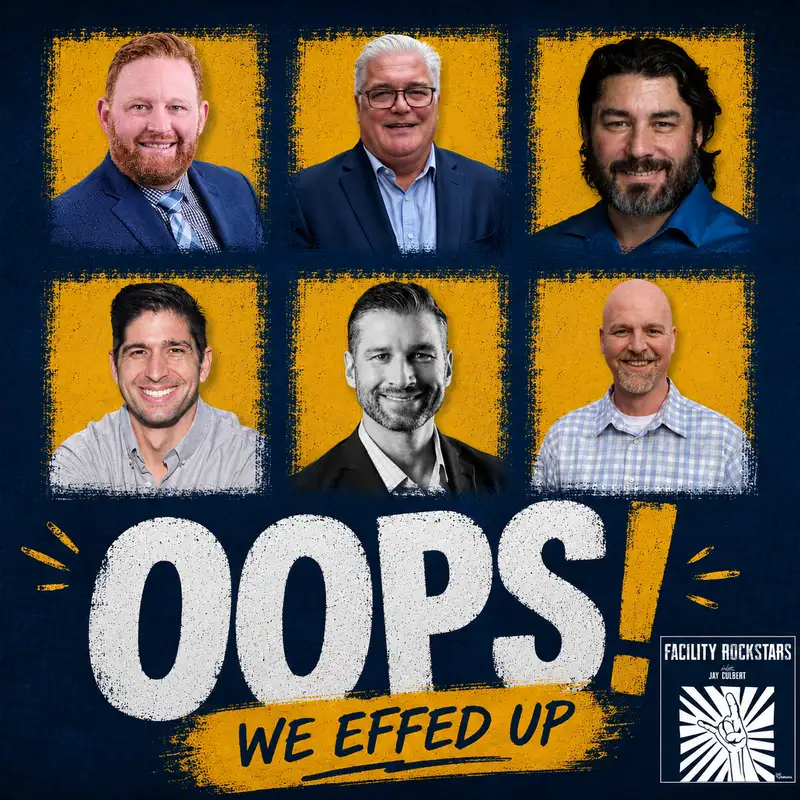
For 117 episodes, Facility Rockstars has shared conversations with facility professionals, safety leaders, operators, and industry experts from across New England and beyond. But this week, we're doing something a little different. In this special blooper reel episode, we're pulling back the curtain and sharing some of our favorite behind-the-scenes moments that never made it into the final cuts. From mispronounced names and forgotten intros to off-the-rails conversations, technical hiccups, and plenty of laughter, this episode highlights the authentic moments that happen when real people come together to have real conversations. One of the things that makes Facility Rockstars special isn't just the expertise our guests bring to the table—it's their willingness to show up as themselves. These unscripted moments remind us that behind every title, credential, and leadership role is a person who doesn't take themselves too seriously. So sit back, have a laugh, and enjoy a side of Facility Rockstars that usually ends up on the cutting room floor.   Takeaways: Authentic conversations are often more memorable than perfectly polished ones. Every great podcast episode includes plenty of moments listeners never hear. Leadership and expertise don't require perfection. The strongest professional relationships are often built through genuine human connection. Stepping outside your comfort zone is something guests and hosts experience alike. Humor plays an important role in building trust and camaraderie. Behind every successful episode is a team willing to laugh at themselves. Links: Sal DeFrancoLinkedIn: https://www.linkedin.com/in/salvatoredefranco/  Matt Anthony LinkedIn: https://www.linkedin.com/in/matt-anthony13/  Michael RichLinkedIn: https://www.linkedin.com/in/michael-rich-cfm-00b06b19a/  Don BezekLinkedIn: https://www.linkedin.com/in/donbezek/  Colby FillippelliLinkedIn: https://www.linkedin.com/in/colby-fillippelli-cfm-8591097/  Mike Albano
#117

How Observation, Humility, and Coaching Create Better Facility Leaders with Maria Ruiz of UNICEF USA

What does it take to lead people through uncertainty, change, and constant operational demands? In this episode of Facility Rockstars, Jay Culbert sits down with Maria Ruiz, Facilities and Operations Manager at UNICEF USA, to discuss the leadership lessons she's learned across healthcare, nonprofit, and corporate environments. Maria shares why learning not to take things personally transformed her leadership approach, how succession planning extends far beyond retirement, and why empathy, mentorship, and continuous improvement are critical for building resilient teams. From managing difficult personnel decisions to creating trust through daily check-ins, Maria offers practical insights for facilities professionals looking to become stronger leaders while supporting the people around them.   Takeaways: Don't take challenges personally. Pause, seek context, and focus on what the situation can teach you. Maria emphasized that some of her biggest leadership growth came from learning to step back before reacting. By seeking to understand the circumstances, perspectives, and motivations behind a situation, leaders can turn setbacks and difficult conversations into valuable learning opportunities. Succession planning should account for retirements, leaves of absence, injuries, and unexpected organizational changes. Too often, succession planning is viewed only through the lens of retirement, but Maria highlighted the importance of preparing for any scenario that could create a gap in leadership or operational knowledge. Building processes, documentation, and cross-training into everyday operations helps teams remain resilient when unexpected changes occur. Observation is a critical leadership skill. Some of the most important processes are often undocumented and learned through listening and watching. Maria shared how paying attention to behaviors, workflows, and unspoken routines helped her understand organizations more effectively than any manual could. Leaders who take the time to observe their environment often uncover opportunities for improvement that others overlook. Knowledge sharing is essential. Information that stays with one person creates risk for the entire organization. Encouraging team members to document processes, communicate insights, and share expertise helps create a stronger and more adaptable team. When knowledge is openly shared, organizations are better prepared to navigate turnover, growth, and unexpected challenges. Regular personal check-ins build trust, strengthen culture, and help teams feel supported. Maria believes that effective leaders check in on people, not just projects. Simple conversations that focus on an employee's well-being can create stronger relationships, improve engagement, and foster a culture where team members feel valued and supported. Great leaders invest in coaching, mentorship, and continuous learning to identify blind spots and improve their effectiveness. Maria spoke about the value of having mentors and professional coaches who can offer an outside perspective. By remaining open to feedback and guidance, leaders can continue growing, challenge their own assumptions, and become more effective in supporting their teams. Continuous improvement is a daily practice that starts with asking questions, challenging assumptions, and staying curious. Rather than treating improvement as an occasional initiative, Maria views it as an ongoing mindset. Consistently asking "why," seeking root causes, and looking for better ways to work helps organizations become more efficient, adaptable, and prepared for future challenges. Quote of the Show:  "We're behind the scenes, but always on the front lines, and the front lines are tough." Links: LinkedIn: https://www.linkedin.com/in/mariaruiz814/  Website: https://www.unicefusa.org/  The Toyota Way by Jeffrey Liker: https://a.co/d/0j0d9AoN  Extreme Ownership by Jocko Willink and Leif Babin: https://a.co/d/07a90UL9 
#116

Building the Plane While Flying It: Nick Petrosino on Growth, Accountability, and the Future of FM

In this episode, Nick Petrosino, Corporate Facilities Manager at Milton CAT, shares his winding path from Bridgewater State University to Massachusetts Maritime Academy to managing over a million square feet across six states. Nick opens up about the self-awareness it took to recognize he needed a different environment to thrive, and how Mass Maritime gave him the discipline and focus to launch a career he's now spent nearly a decade building with the same company. His story is one of calculated risk, intentional growth, and the kind of quiet drive that keeps buildings running before anyone notices a problem. The conversation dives deep into the operational realities of managing a large, multi-location facilities team — from growing his department from three to eight people, to navigating vendor accountability, CMMS implementation, and the constant balancing act of day-to-day demands versus long-term strategy. Nick is candid about the challenges of training new staff, managing complexity, and why soft skills will always outlast technical knowledge. He also shares his passion for giving back to the next generation of FM professionals through his work with AFE's Young Professionals Committee, making a compelling case that future-proofing the industry starts now.   Takeaways: Doing your job well keeps you employed — going beyond your role is what advances your career. Clocking in and doing the bare minimum might keep you on the payroll, but taking initiative, creating value, and growing outside your defined role is what separates people who climb from people who stagnate. Soft skills are ten times more valuable than hard skills. Hard skills can be taught; communication, conflict management, and the ability to network and present yourself are far harder to develop and far more impactful in the long run. Vendor accountability starts with clear expectations up front. When scope, response times, quality standards, and communication expectations aren't defined clearly from the start, everyone interprets the agreement differently when problems arise — and they always do. Facilities teams that stay stretched thin leave performance gaps. Growing the team intentionally — as Nick did by adding regional facility managers and coordinators — reduces response times, builds closer relationships with local stakeholders, and allows leadership to operate strategically rather than reactively. A CMMS only creates value if people actually use it. Technology doesn't fix broken processes — it amplifies them. Before selecting a platform, map out the pain you're actually trying to solve, test real use cases, and prioritize adoption over feature count. Generic training only goes so far — situational judgment comes from experience. You can teach a work order system, but you can't easily teach when to escalate, when to push back, or how to prioritize competing demands. Building that judgment takes time, mentorship, and real-world repetition. The FM industry is one retirement cycle away from a leadership gap. Engaging and retaining young professionals isn't just good practice — it's a necessity. If the industry doesn't invest in the next generation now, institutional knowledge walks out the door and leadership roles go unfilled. Quote of the Show: "Doing your job well keeps you employed. But taking initiative, creating value, getting outside your comfort zone, and growing beyond your role is what really advances your career." Links: LinkedIn: https://www.linkedin.com/in/nicholas-petrosino-cpmm-473b89a6/  Website: https://www.miltoncat.com/ 
#115

Live from VPPPA: Contractor Safety, HOP, and Culture Change in Action

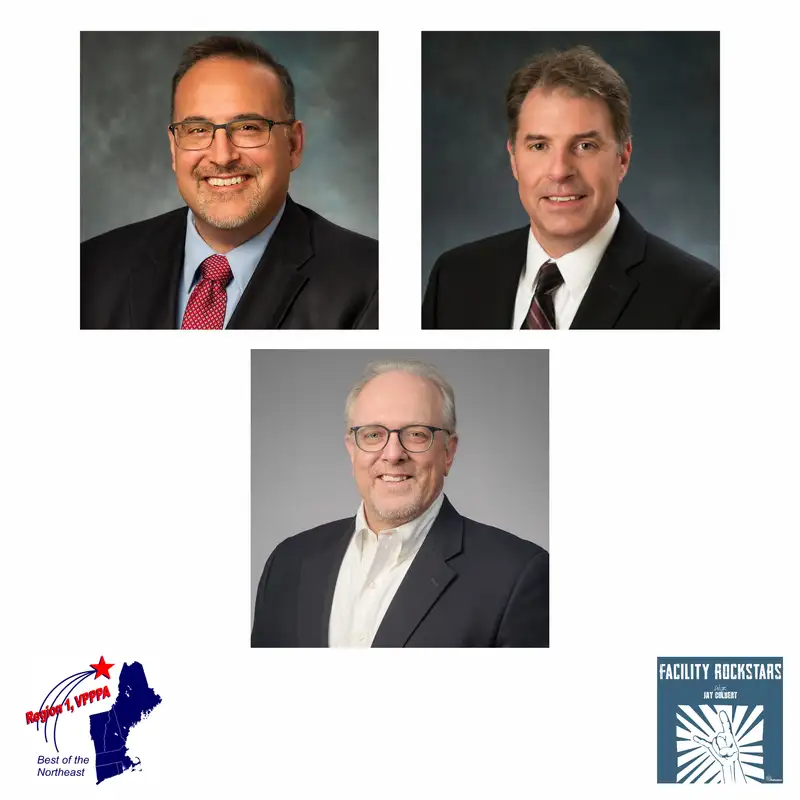
Recorded live at the 2026 VPPPA Region I Annual Conference & Exhibition in Portland, Maine, this special panel episode of Facility Rockstars brings together three leaders from Collins Aerospace's Windsor Locks facility, Matt Twardy (EHS), Jeff Houle (Facilities, RTX), and John Mullen (Fuss & O'Neill Manufacturing Solutions), for a compelling, real-world conversation on Human and Organizational Performance (HOP) philosophy. Host Jay Culbert emcees the discussion, which centers on five core HOP principles: people make mistakes, blame fixes nothing, context drives behavior, learning enables improvement, and, perhaps most critically, leadership response matters. The panel uses vivid, unfiltered stories from the plant floor to illustrate how shifting from a blame-and-punish culture to a learning mindset changes everything, from how teams communicate near misses to how contractors show up for conversations they used to avoid. The conversation goes far beyond theory. Panelists share first-hand experiences, from a fired electrician whose termination exposed a broken system, to a plant-wide blackout at 2 a.m. handled with remarkable calm, to a trenching job that uncovered decades-old underground conduit and called for a tactical pause and new technology. Audience members also share their own turning-point moments, reinforcing the message that psychological safety isn't a program, it's a philosophy, and it has to start with the leader in the room. Whether you're in EHS, facilities, or operations, this episode is a masterclass in how the right response at the right moment can change an entire culture.   Takeaways: Leadership response is the most powerful culture tool you have. When leaders respond negatively to problems, teams get better at hiding them. When leaders respond with curiosity and calm, teams get better at surfacing them. The tone you set in the first five minutes of a critical conversation echoes for years. Replace "investigation" with "learning review." The language you use signals your intent before you say another word. Framing post-incident conversations as learning exercises—not investigations—opens the door to honest, useful information that actually improves your systems. Understand the gap between "work as imagined" and "work as done." Plans look clean on paper. Reality in the field is always more complicated. The goal isn't to eliminate adaptation—it's to understand it so you can build more resilient systems that help workers fail safely when things go sideways. Context is everything before you draw a conclusion. Before assuming a rule was broken, ask why. In multiple examples from this episode, workers who appeared to have violated safety protocols had actually done everything they were trained to do. The system failed them—and pausing to get context made all the difference. Psychological safety isn't built in a meeting—it's built in moments. Every time a leader chooses learning over blame, they make it slightly easier for the next person to raise their hand. One audience member described how a single calm response to a lockout-tagout incident became the catalyst that transformed reporting culture at an entire facility. Apply "tactical pause" instead of "stop work." The language matters. "Stop work" carries political weight that can shut people down. A tactical pause reframes the moment as collaborative problem-solving—and keeps the team focused on solutions rather than defensiveness. Invest in contractor relationships before the job starts. When contractors trust that they won't be blamed for raising issues, they stop hiding problems and start asking for help. Building that relationship upfront—through honest pre-job conversations and quarterly stand-downs—pays off in safer, smoother projects every time. Quote of the Show:  "There's a small percentage of the population that will willfully do something wrong. You cannot go into any event thinking the employee did something willful. Flip the script—pretend your absolute best rockstar caused it. It changes your mindset and approach with everything." — Jeff Houle Links: John Mullen Email: John.MullenJr@collins.com  Jeffrey HouleLinkedIn: https://www.linkedin.com/in/jeffrey-houle-4b56bb35/  Email: jeff.houle07@gmail.com  Matt TwerdyLinkedIn: https://www.linkedin.com/in/matthew-twerdy-mba-csp-chmm-9661132a/   Email: Matthew.Twerdy@collins.com  VPPPA Region I Website: https://vppregion1.com/ 
Previous Page

Displaying 1 - 20 of 135 in total

Next Page